
Bandung workshops
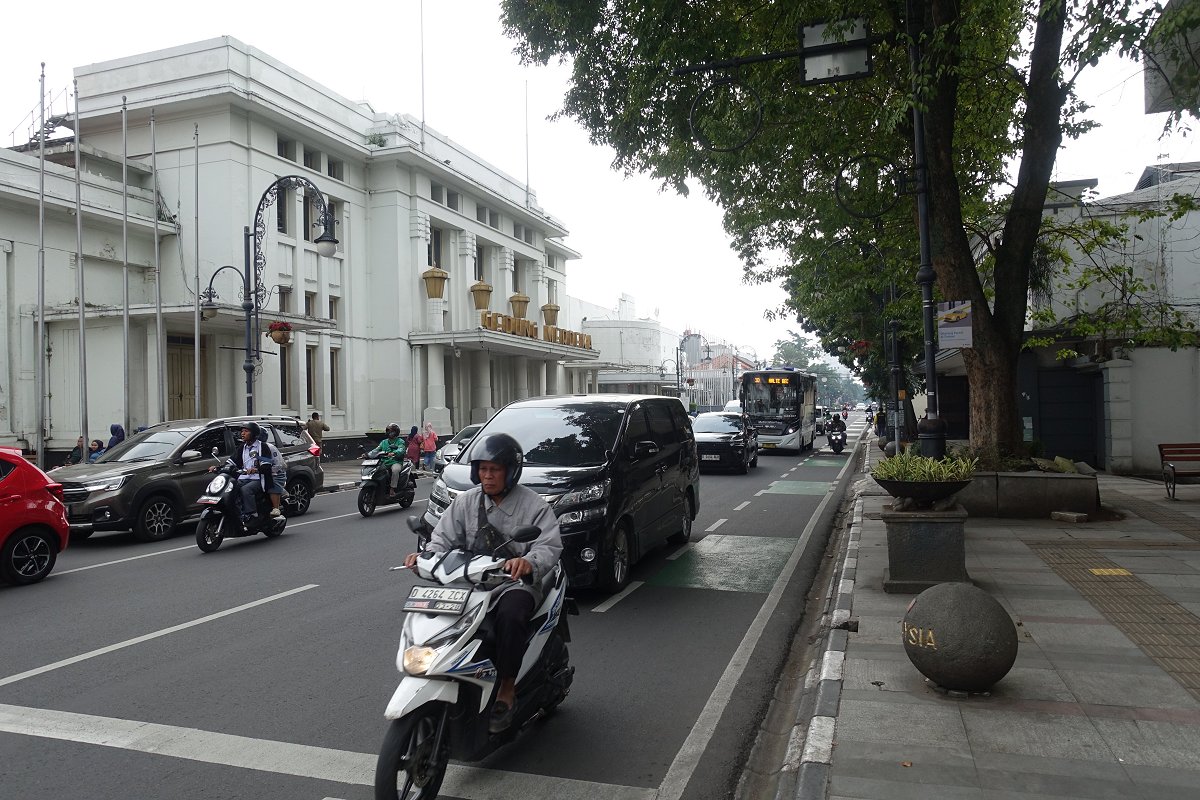
February 2026, Favas.net was involved in providing workshops on sustainable mobility in the city of Bandung, Indonesia, located at the Hotel Savoy Homann, historic place of the famous Bandung Conference of 1955. The training took place as part of the ACTIVE capacity building program, organized by Shelley Bontje (Knowledge & Partnership Manager at the Dutch Cycling Embassy; DCE) and Marise Meijer (Sustainable Mobility Advisor at the Netherlands Enterprise Agency; RVO) in collaboration with the World Bank. Experts Rob van der Bijl (Favas.net / Ghent University / RVDB Urban Planning) and Dirk de Jager (Sustainable Solutions), who were flown in as DCE-affiliates, facilitated content-wise the workshops and the accompanying site visits. The participants travelled from numerous cities across Indonesia. Over two days, the workshops combined technical sessions, creative discussions, and site visits within the central area of Bandung. Participants explored practical approaches to integrating walking and cycling into the planned Bus Rapid Transit (BRT), that served as the main case.
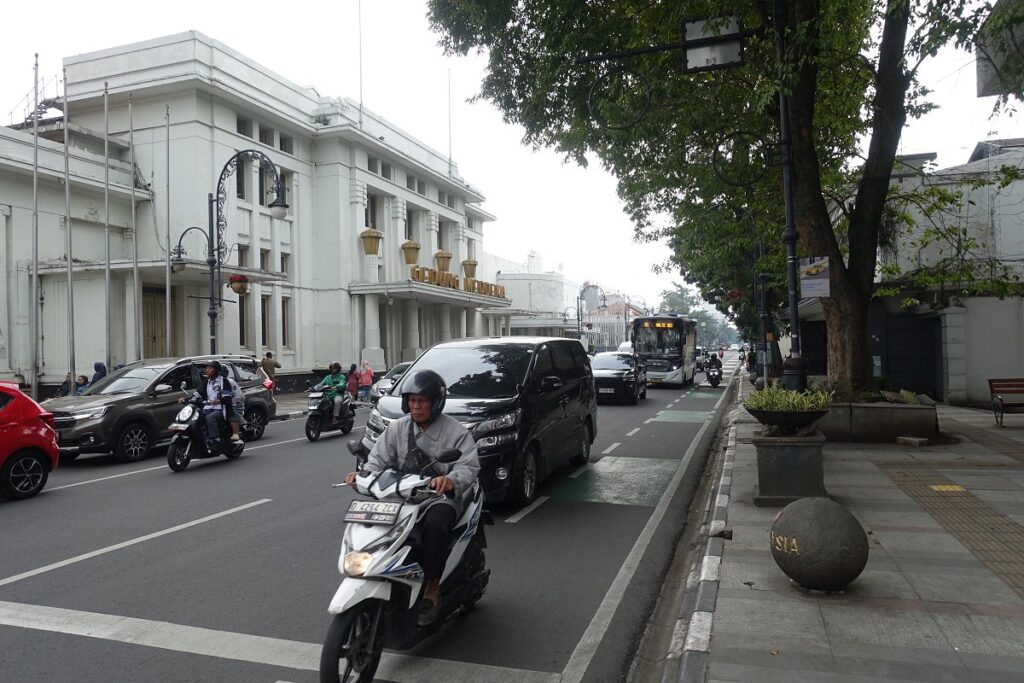
Bandung city – Jalan Asia-Afrika
Given the current state of affairs in Indonesian cities – namely, relatively little use of regular public transport and a very modest role for cycling – the challenge of sustainable mobility and the combined development of cycling, walking, and public transport is more than challenging. Nevertheless, the participants have ventured to at least taking some initial steps. Crucial in this regard has been the prospect of future, cohesive networks (for walking, cycling, and public transport) – specifically linked to the desired social cohesion and related accessibility challenges in Indonesian cities like Bandung.
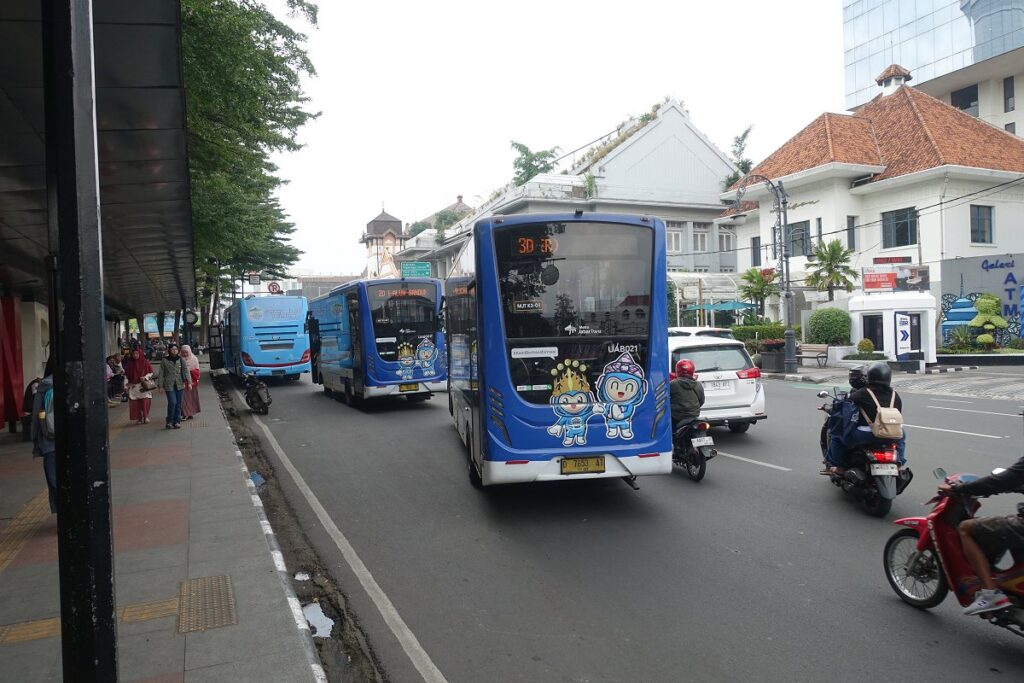
Bandung city – Alun-Alun area (bus station)
Some topics
During the workshops, participants were divided into six groups. Faves.net assessed the results of each group. Several important topics are discussed.
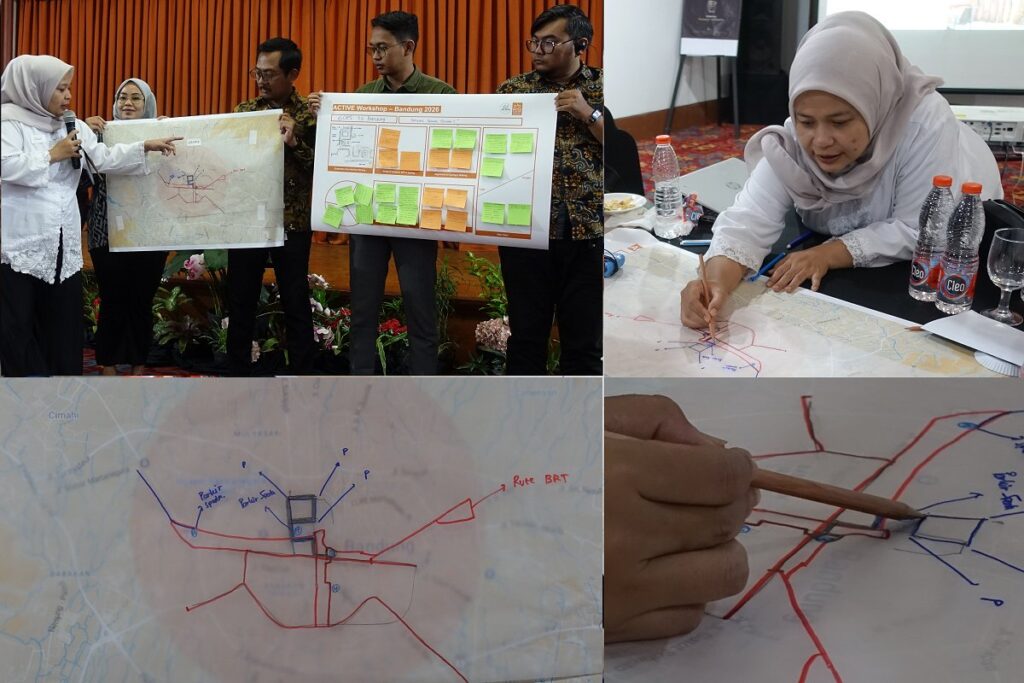
The workshops offered participants creative opportunities to explore how walking and cycling could be linked to the proposed bus corridors. It’s all about the details.
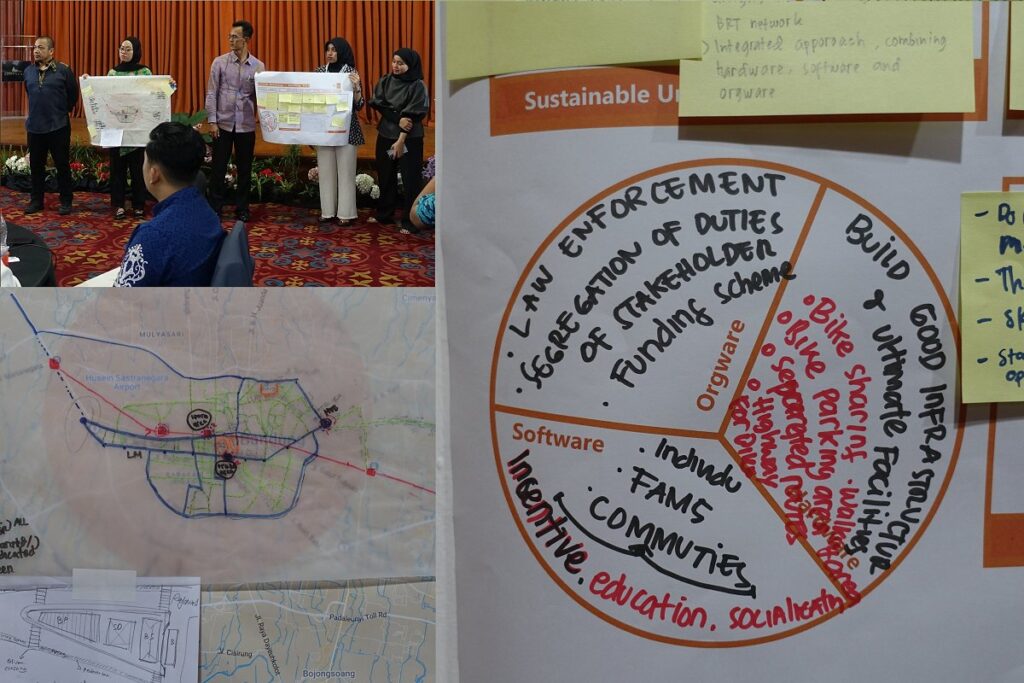
All groups explored practical approaches to integrating walking and cycling into BRT systems through a combination of ‘Hardware’ (e.g. street design, network configuration, and physical infrastructure), ‘Software’ (e.g. policy frameworks, regulations, and behaviour change measures) and ‘Orgware’ (e.g. institutional coordination, governance arrangements, and implementation capacity).
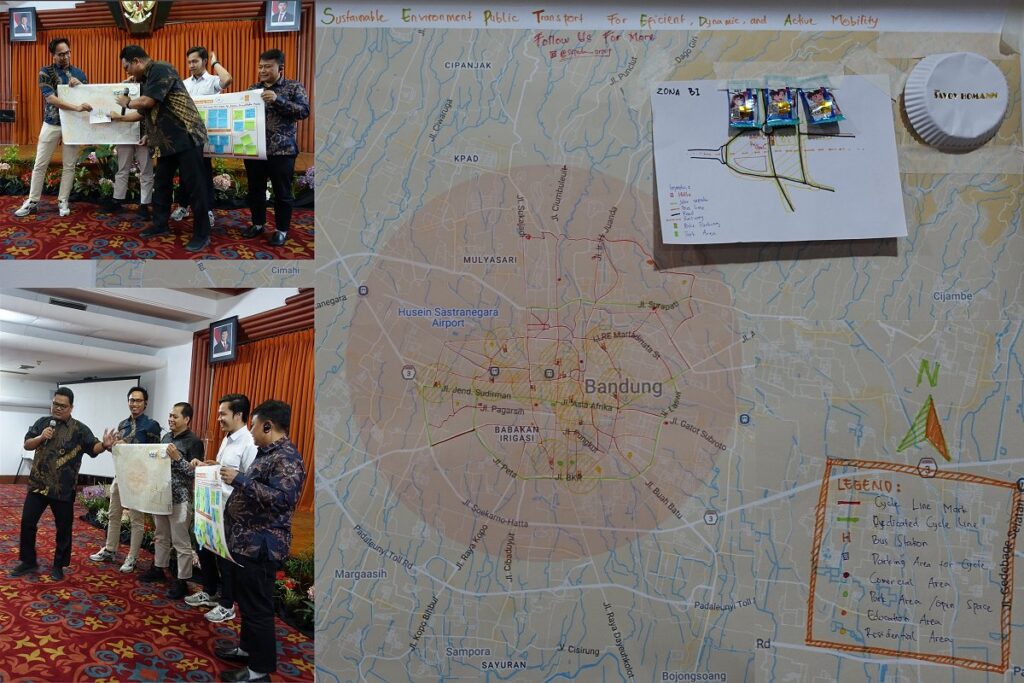
One of the groups has enthusiastically and cleverly visualized how a future cycling network in downtown Bandung could be organized around the local BRT stops.
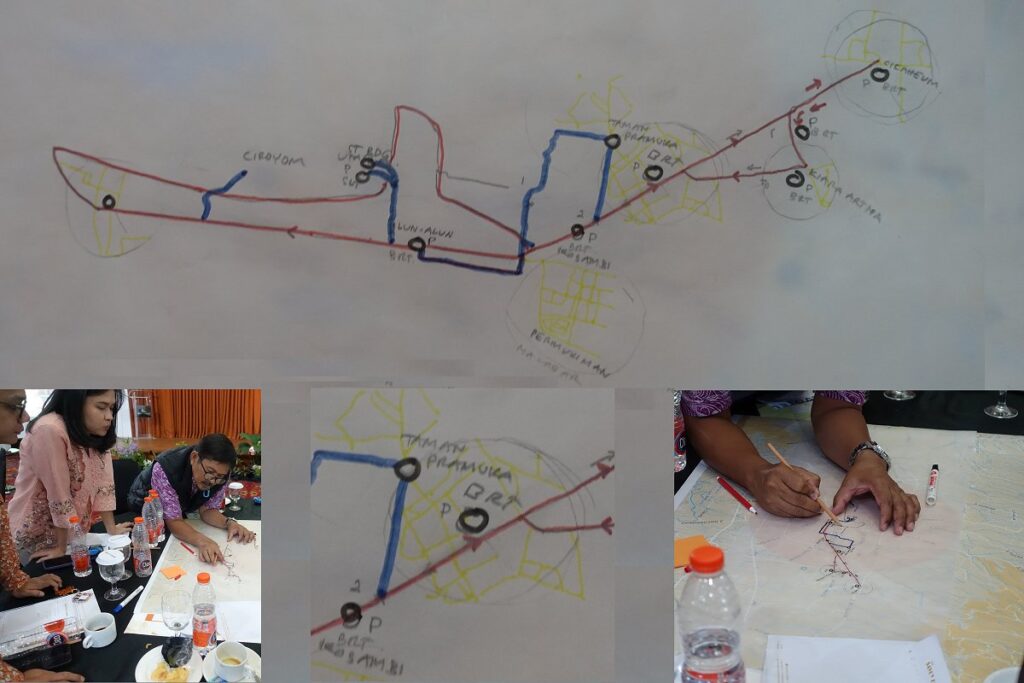
The planned BRT will form a continuous, connecting line in future Bandung. A group has investigated how this line can provide walking and cycling access from the BRT-stops to the surrounding areas of various neighbourhoods.
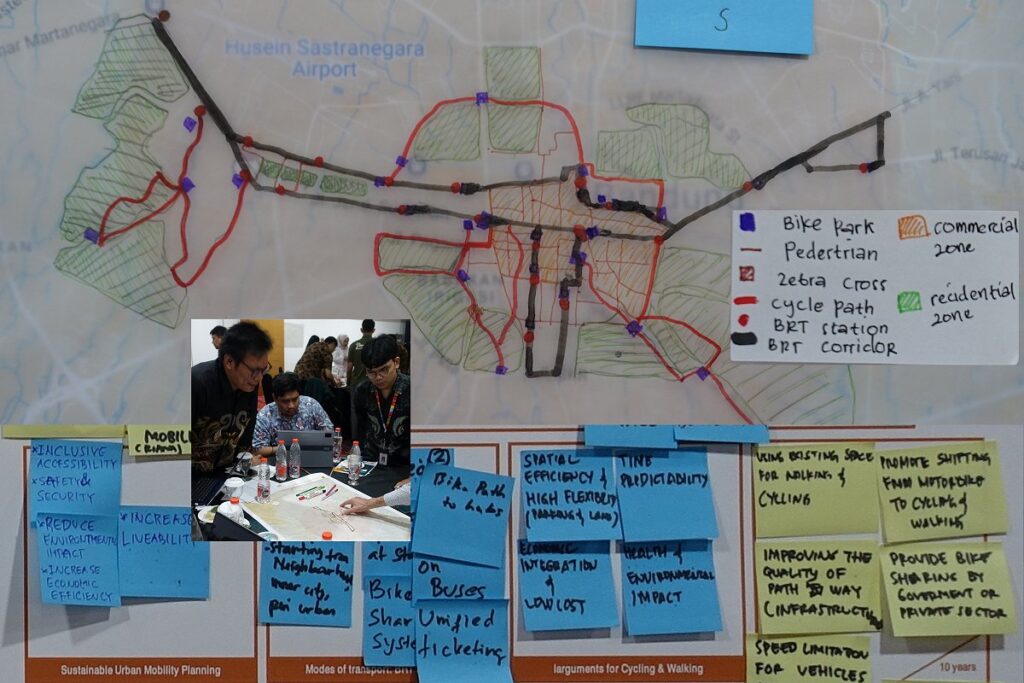
The commercial and residential areas in Bandung benefit from integrated networks. This group has provided a detailed vision of what such a network could look like. Careful consideration has been given to the placement of new bicycle parking facilities.
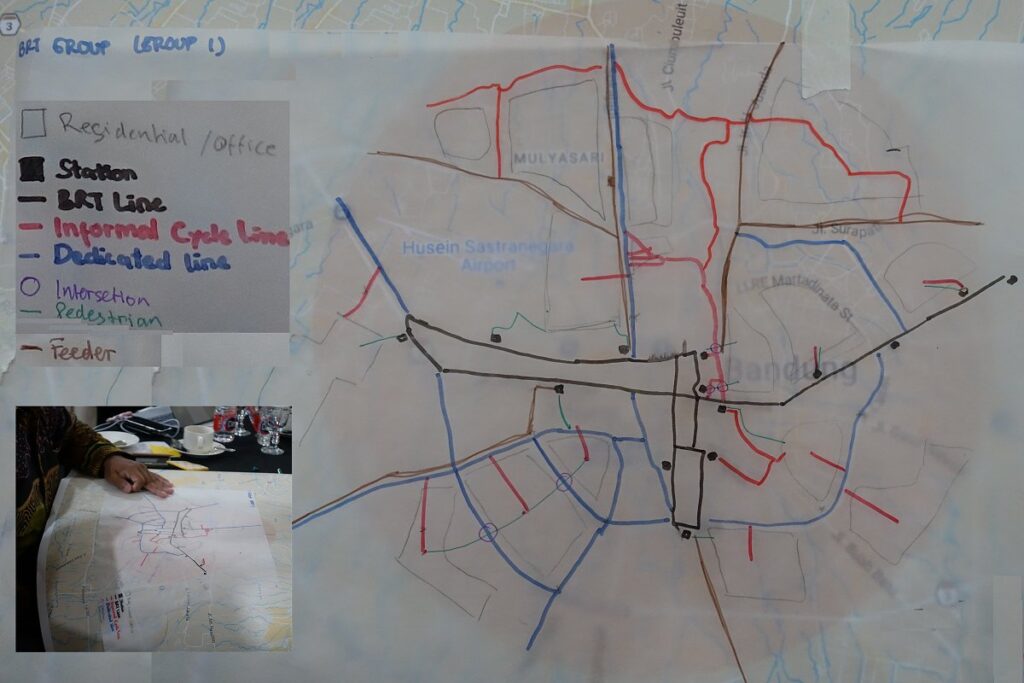
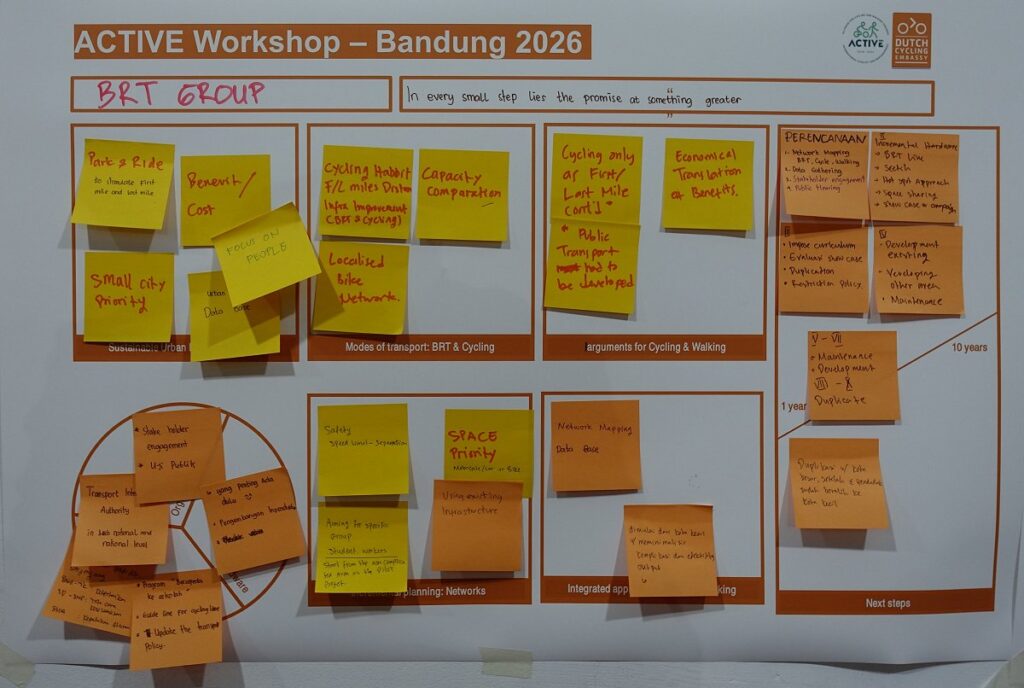
A group has succeeded in creating a perspective on integrated BRT corridors within the central part of Bandung, complemented by a system of informal and dedicated cycling routes.
Appreciation
Hafida Fahmiasari (Transport Specialist at The World Bank) drew the following meaningful conclusions: “Using BBMA (Bandung Basin Metropolitan Area) as a working case, discussions focused on how to move from corridor-based planning toward system-level integration – ensuring that BRT investments translate into improved accessibility, safety, and inclusivity. The strong engagement from local governments and practitioners reflects growing recognition that sustainable urban mobility depends on seamless multimodal integration. … Advancing active mobility alongside public transport is not an add-on; it is fundamental to delivering resilient and inclusive metropolitan transport systems.”
Marise Meijer (RVO) expressed her appreciation for the two experts: “… we thank our wonderful trainers Rob van der Bijl and Dirk de Jager for their engaging sessions, and all participants for their critical questions, engagement, creativity and their commitment to making active mobility a reality in their cities. It was inspiring to witness the energy and collaboration in action, and to collectively take a step towards a more inclusive, green, and people-centered urban mobility system. Terima Kasih!”
Favas.net concludes that the Bandung workshops represent an important step in putting sustainable and inclusive mobility on the agenda in Indonesian cities. After all, the participants work in these cities where this mobility can and should be implemented. Our appreciation and gratitude goes to the representatives of the city of Bandung, the World Bank and the Dutch Embassy in Indonesia, who worked hard to make the event a success. Special thanks go to our team members Shelley Bontje, Marise Meijer, Hafida Fahmiasari, and, of course, our esteemed colleague Dirk de Jager.
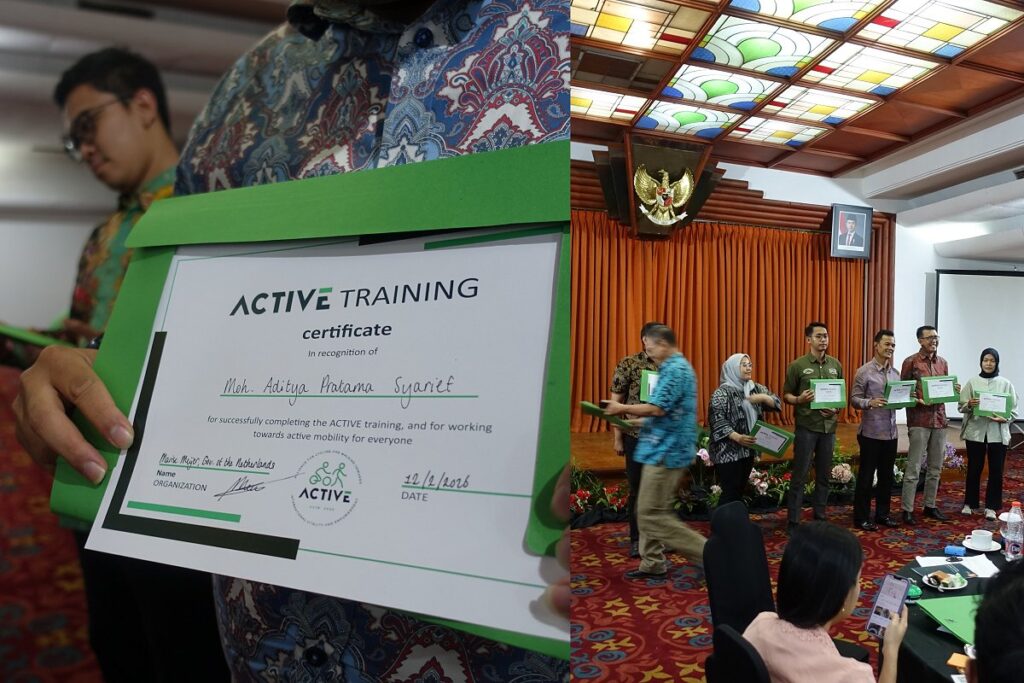
The training concluded with final group presentations covering their assignments, followed by a certificate ceremony celebrating the participants’ efforts and insights gained through the two days.
Text: Favas.net, thanks to Shelley Bontje, Marise Meijer & Hafida Fahmiasari
Research & editing: Favas.net
Images: Favas.net
See also Lightrail.nl on BRT …
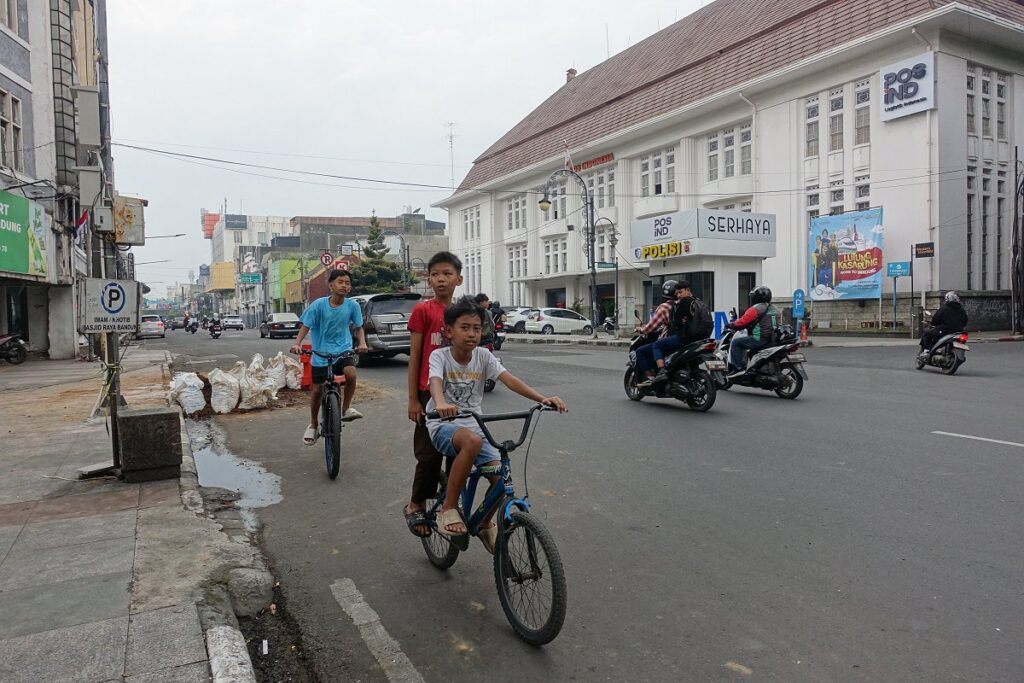
Boys cycling in the Alun-Alun area